Canadian Space Agency Award enables Volta’s LightPort Receiver to the Moon
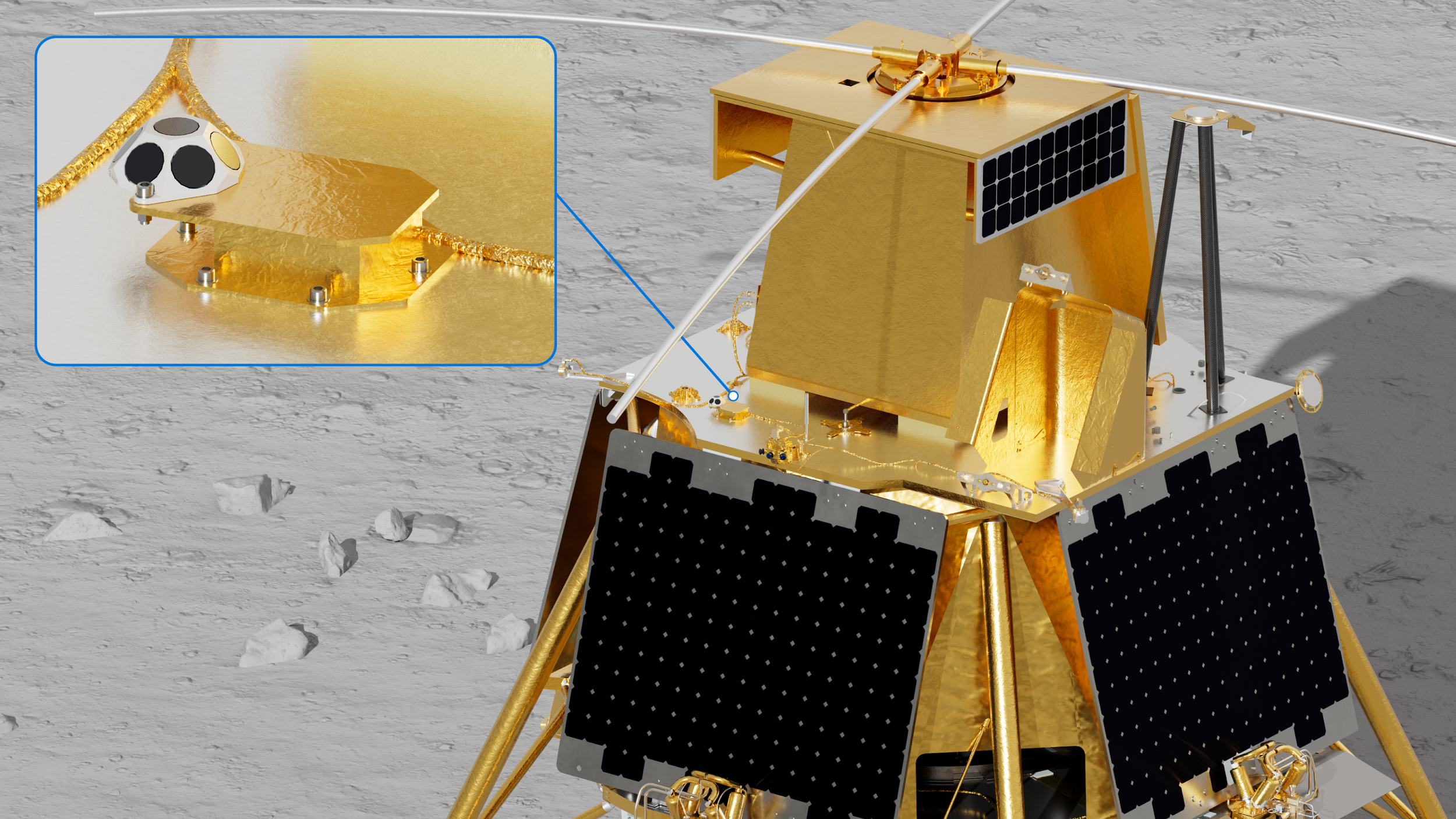
*Firefly’s rendering of Volta’s LightPort payload integrated on the top deck of Firefly’s Blue Ghost lunar lande
Volta has selected Firefly’s Blue Ghost lander for delivery to the far side of the Moon-a critical first step to help future commercial and scientific missions survive the lunar night
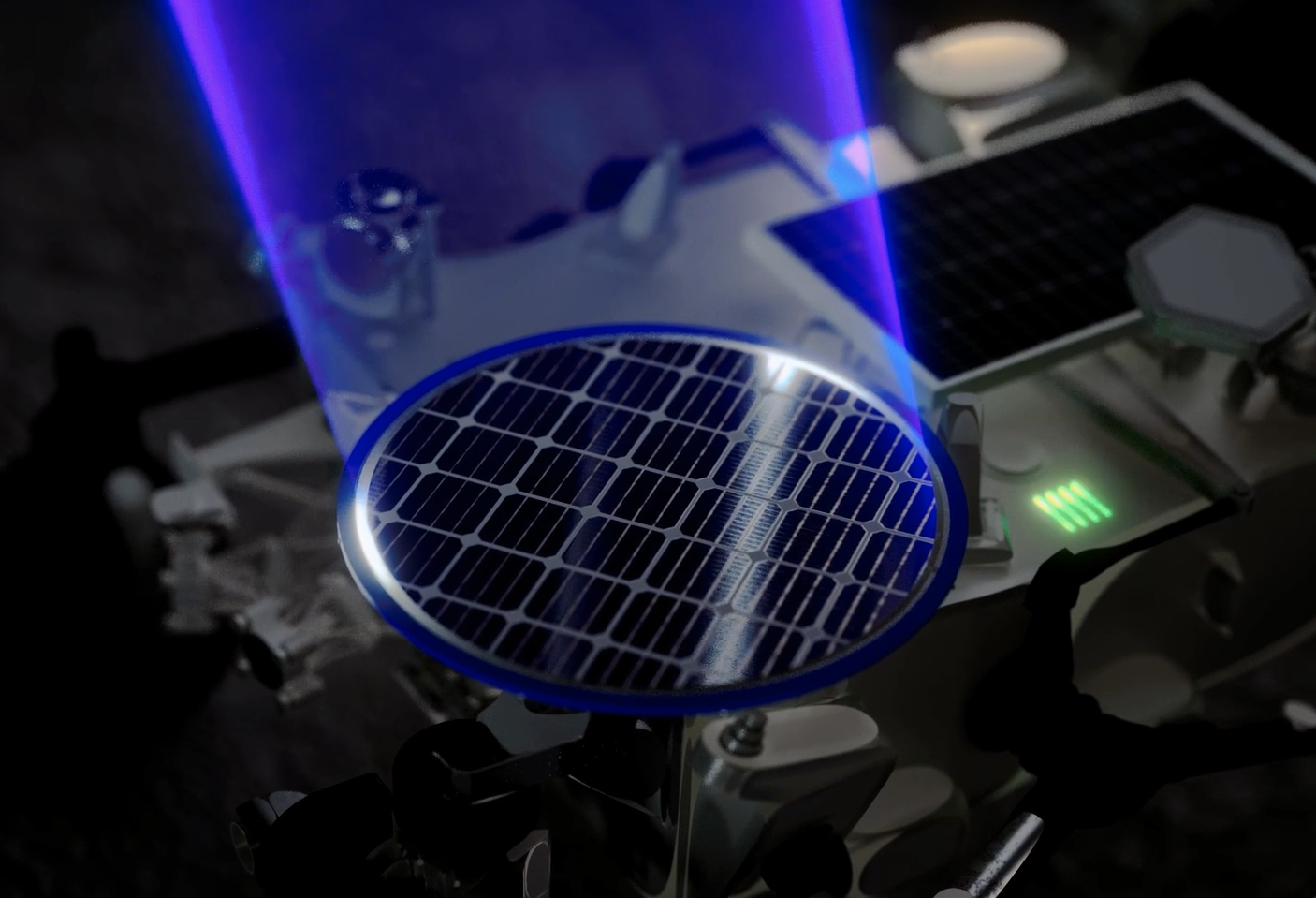
Montreal, Canada, December 12, 2025 – Volta Space Technologies, a space and defense technology company leading the way in enabling future missions to survive the lunar night, announced selection of Firefly’s Blue Ghost Mission 2 lunar lander to host Volta’s LightPort, a wireless power receiver for its first in-space demonstration. Funding announced in October from the Canadian Space Agency empowers Volta to build and launch LightPort to the lunar surface. The payload will serve as a technology demonstration of the LightPort, which will be a critical component in all future lunar assets that will benefit from leveraging Volta’s lunar orbital power network- the LightGrid.
“Firefly is proud to welcome Volta to our second Blue Ghost mission and serve as a core partner in the ongoing development of lunar power utilities,” said Jason Kim, CEO of Firefly Aerospace. “Our international mission will enable critical technology demonstrations that lay the groundwork for lasting operations on the Moon. Longer term, our Blue Ghost landers and Elytra orbiters are well equipped to support Volta’s larger vision for a lunar power network, and we look forward to seeing the evolution of our collaboration in the years ahead.”
Volta’s LightGrid is a planned network of solar-collecting satellites in lunar orbit that transmit energy via laser to surface receivers called LightPorts, which are integrated into landers, rovers, and any lunar infrastructure. Firefly’s upcoming Blue Ghost Mission 2 targeted to launch in 2026, will validate the first LightPort and showcase how lunar assets can access Volta’s orbital power grid.
“Partnering with Firefly on Blue Ghost Mission 2 is an important step forward for Volta and the future of lunar infrastructure,” said Justin Zipkin, CEO of Volta. “This collaboration allows us to prove our LightPort receiver in a real lunar environment and move one step closer to delivering a fully integrated power grid for the Moon.”
Volta is planning to make wireless power commercially available on the Moon beginning in 2028, when Volta’s proprietary laser will be deployed in Lunar orbit to start delivering power and optical communications to lunar assets with the integrated LightPort.
The low-mass LightPort will make thousands of watts of electrical and thermal power available to its users on demand, anywhere on the Moon, alongside high-speed, low-latency telecommunications, supporting permanent presence and sustained commercial and scientific activity.
About Volta Space Technologies
Volta is building the energy grid for sustainable lunar operations, enabling endless and affordable power to lunar surface missions. Volta’s Optical Wireless Power Transmission (OWPT) stack has been funded in part by CSA, NASA, ESA, NATO and the U.S. Department of War, Operational Energy-Innovation Office, and Naval Research Lab. Volta will begin orbital power missions in 2028 and will subsequently extend the reach of future lunar-based power systems like nuclear fission. Volta’s long-term vision includes adding communication and positioning, navigation, and timing (PNT) services to become the dominant lunar utility provider.
About Firefly Aerospace
Firefly Aerospace is a space and defense technology company that enables government and commercial customers to launch, land, and operate in space – anywhere, anytime. As the partner of choice for responsive space missions, Firefly is the only commercial company to launch a satellite to orbit with approximately 24-hour notice. Firefly is also the only company to achieve a fully successful landing on the Moon. Established in 2017, Firefly’s engineering, manufacturing, and test facilities are co-located in central Texas to enable rapid innovation. The company’s small- to medium-lift launch vehicles, lunar landers, and orbital vehicles are built with common flight-proven technologies to enable speed, reliability, and cost efficiencies for each mission from low Earth orbit to the Moon and beyond. For more information, visit www.fireflyspace.com.
Media Contacts